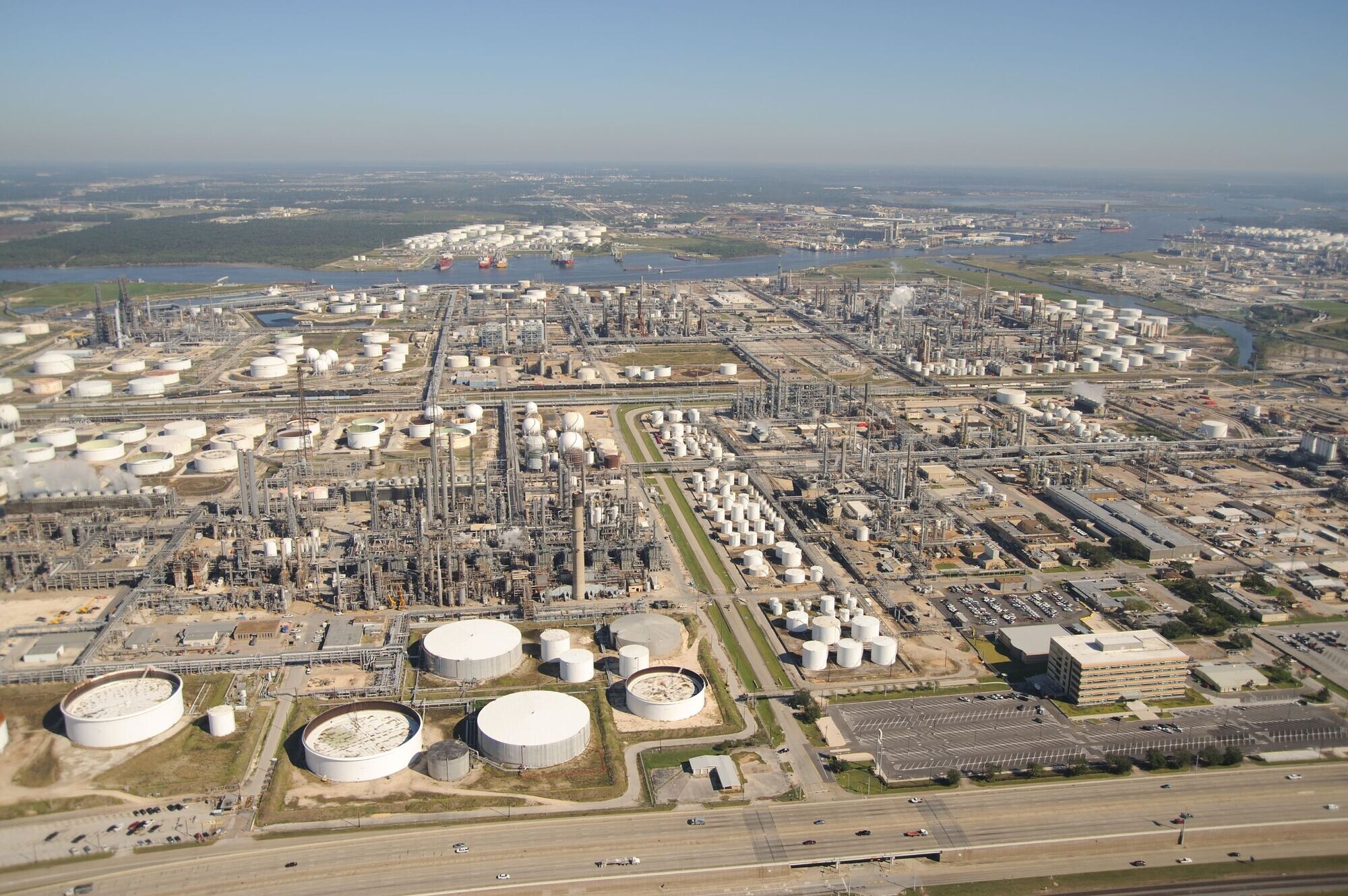
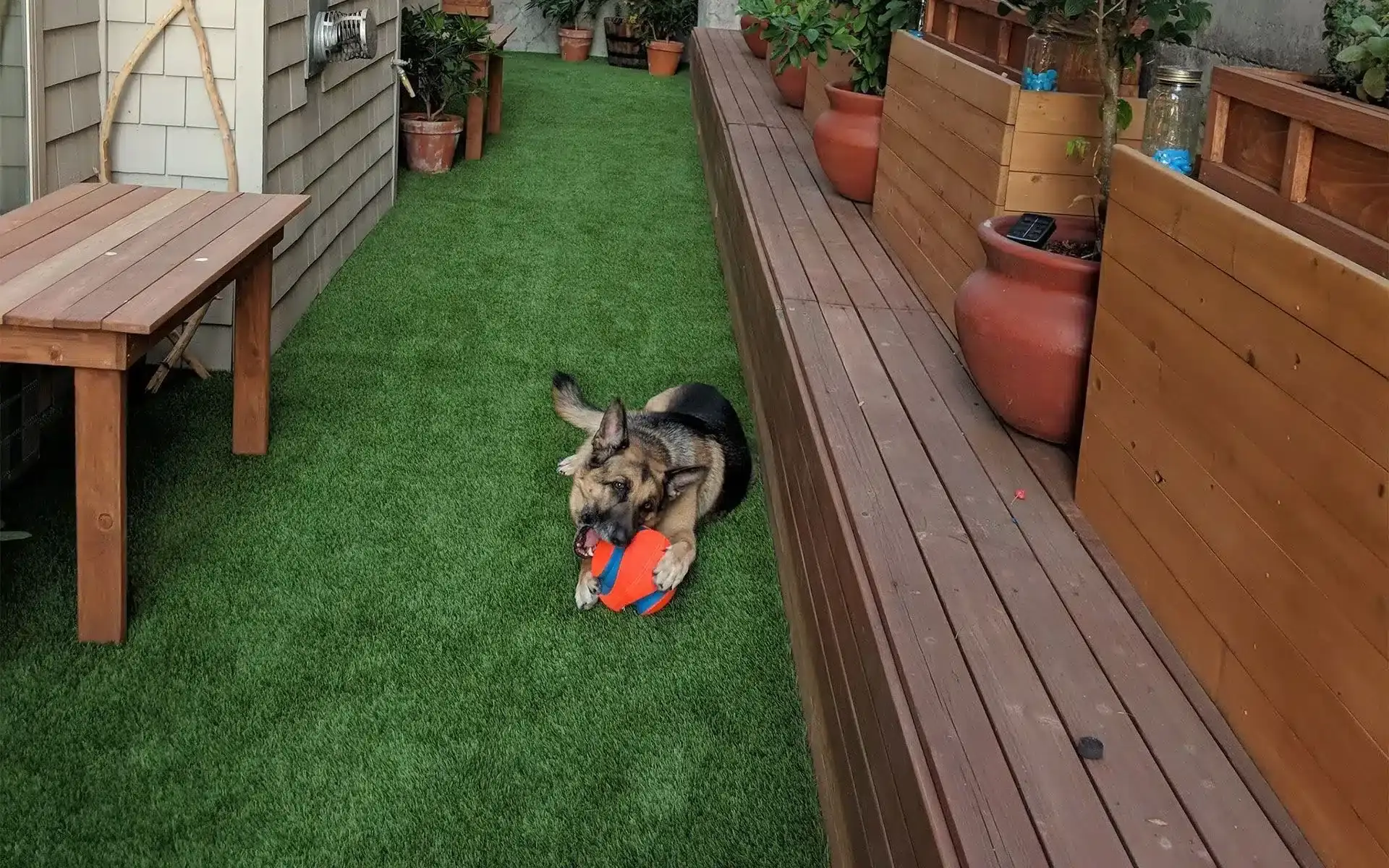
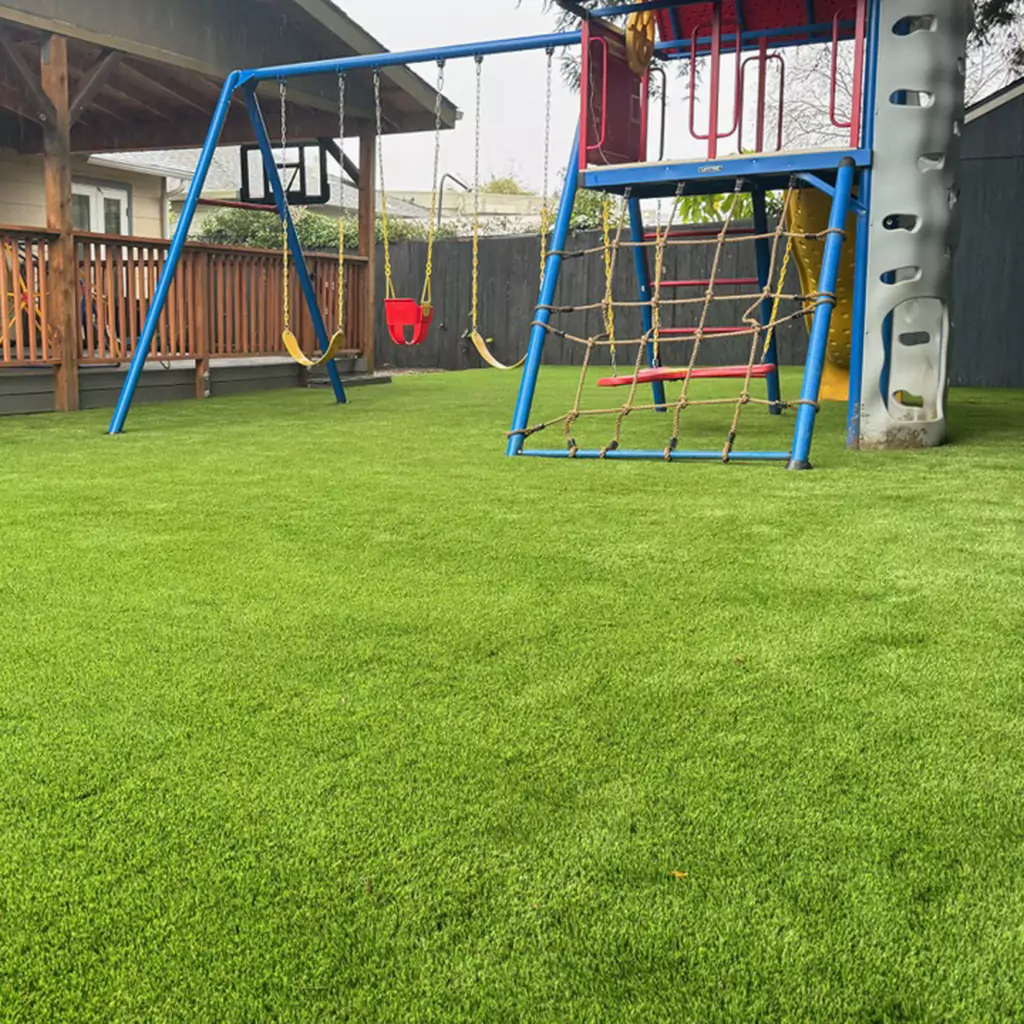
Deer Park sits directly in the fallout zone of the Houston Ship Channel industrial corridor. If you live in Battleground Estates, Heritage Park, or any neighborhood east of the 225, you already know what the air deposits on every horizontal surface. It's the same stuff that coats your truck hood. It coats your grass, your concrete, and anything else sitting outside. Natural grass in this environment isn't just hard to maintain — it's a system that requires regular irrigation, weekly mowing, and active management from someone who's home to do it. When you're running 12-hour shifts at one of the refineries or chemical plants on the east side, that person isn't you six days out of seven.
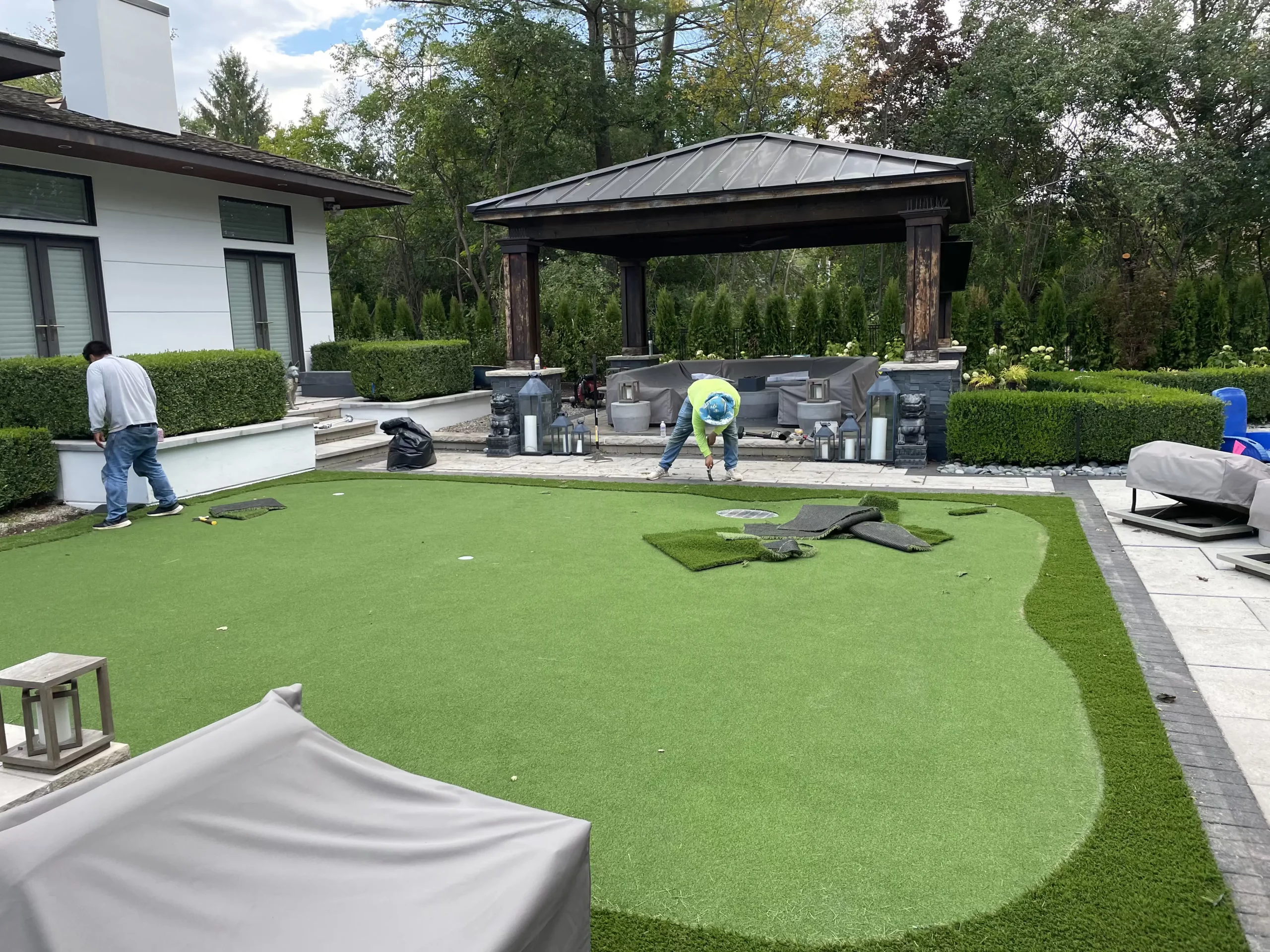
We're Artificial Grass of Deer Park. We've been installing artificial turf in Deer Park and surrounding Ship Channel neighborhoods since the owner pivoted from industrial sandblasting. The crew runs projects the same way we ran blasting jobs: daily safety briefs, written schedules, material counts on paper before any product hits the site. We give you a cost breakout with line items — base aggregate, geotextile fabric, turf material by the square foot, infill product and weight, labor by phase. Nothing bundled into a vague total that you can't compare.
Here's the contractor's calculus on Deer Park specifically: your subgrade is almost certainly Beaumont clay. That material expands when it's wet and contracts when it dries. It has moved every concrete slab on your street at some point. If we don't address that subgrade correctly — with a properly compacted decomposed granite base at the right depth — your turf surface heaves, seams separate, and you have a warranty argument with whoever installed it cheap. We put 4 to 6 inches of compacted DG under every residential install. That spec doesn't change because the customer wants to spend less.
The other Deer Park-specific issue is soot and airborne particulate. Chloride deposition from the Ship Channel complex runs year-round. On a natural lawn it goes into the soil. On synthetic turf it sits on the blade surface and gets tracked inside. The fix is a monthly rinse-down with a garden hose — top-down, enough pressure to clear the blades, let it drain. That's it. Your HOA still wants a maintained-looking yard. Turf delivers that without you setting an alarm to run the irrigation system you forgot to winterize.