Turf removal jobs in the Ship Channel corridor fall into two categories. The first is end-of-life product replacement — synthetic turf that's 15 to 20 years old and has genuinely reached the end of its service life. The fiber has broken down, the backing has degraded, and the product needs to come out and be replaced with a new system. This is a straightforward scope: pull the old product, assess the base condition, determine what base work is needed for the new install, and proceed.
The second and more common category in this corridor is failed installs — turf that was installed 3 to 8 years ago without adequate base preparation and has deteriorated before its expected service life. Seams that opened because the Beaumont clay subgrade wasn't properly addressed. Drainage failures because the base aggregate wasn't specified for Houston's rainfall intensity. Surface deformation because the base wasn't compacted to adequate density. We remove these installs regularly, and every removal includes a thorough assessment of what the original contractor did wrong so we can specify the correct base prep for the replacement.
Being direct: a significant percentage of turf removal work in this corridor is cleaning up after contractors who cut corners on base preparation. The customer paid for a 15-year install and got a 4-year problem. We don't use this page to be self-promotional about it, but we do use it to be honest: when you hire the cheapest bid for a turf install, the base preparation is almost certainly where the cost was cut. The surface cost is visible during the install. The base prep is buried. That's where shortcuts hide.
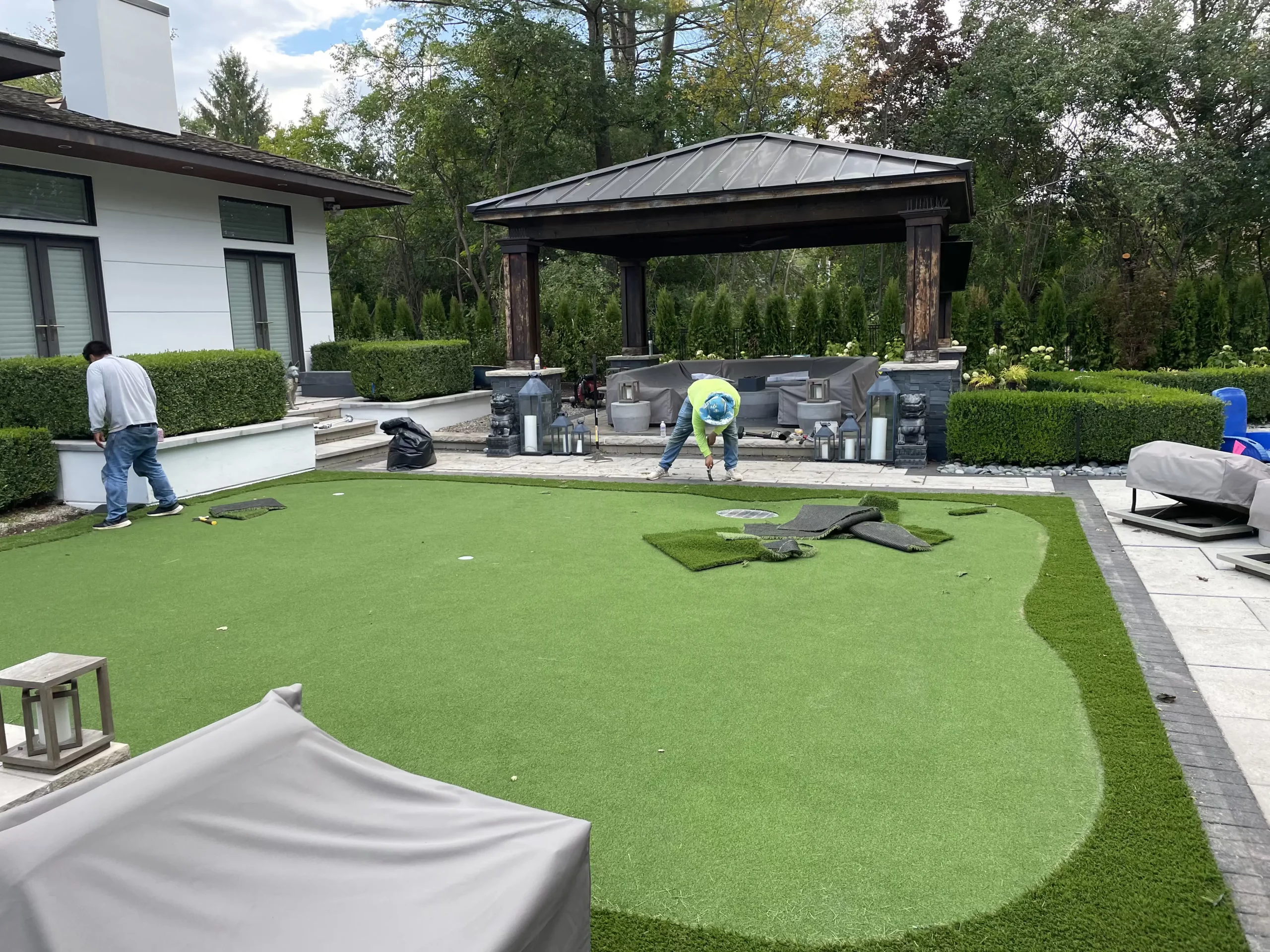
The removal process itself is labor-intensive. Turf is typically stapled or glued at seams and edges and stapled or nailed at the perimeter. Pulling an installed turf system includes removing the perimeter attachment, rolling the turf and moving it off-site, removing the infill layer (infill adds significant weight to the material disposal load), and assessing the base condition below. We document the base condition with photos after removal for the replacement installation scope record.
Disposal of removed turf varies by product. Older rubber-infill systems require specific disposal handling. We handle the disposal logistics as part of the removal scope — you don't need to coordinate a separate disposal arrangement.